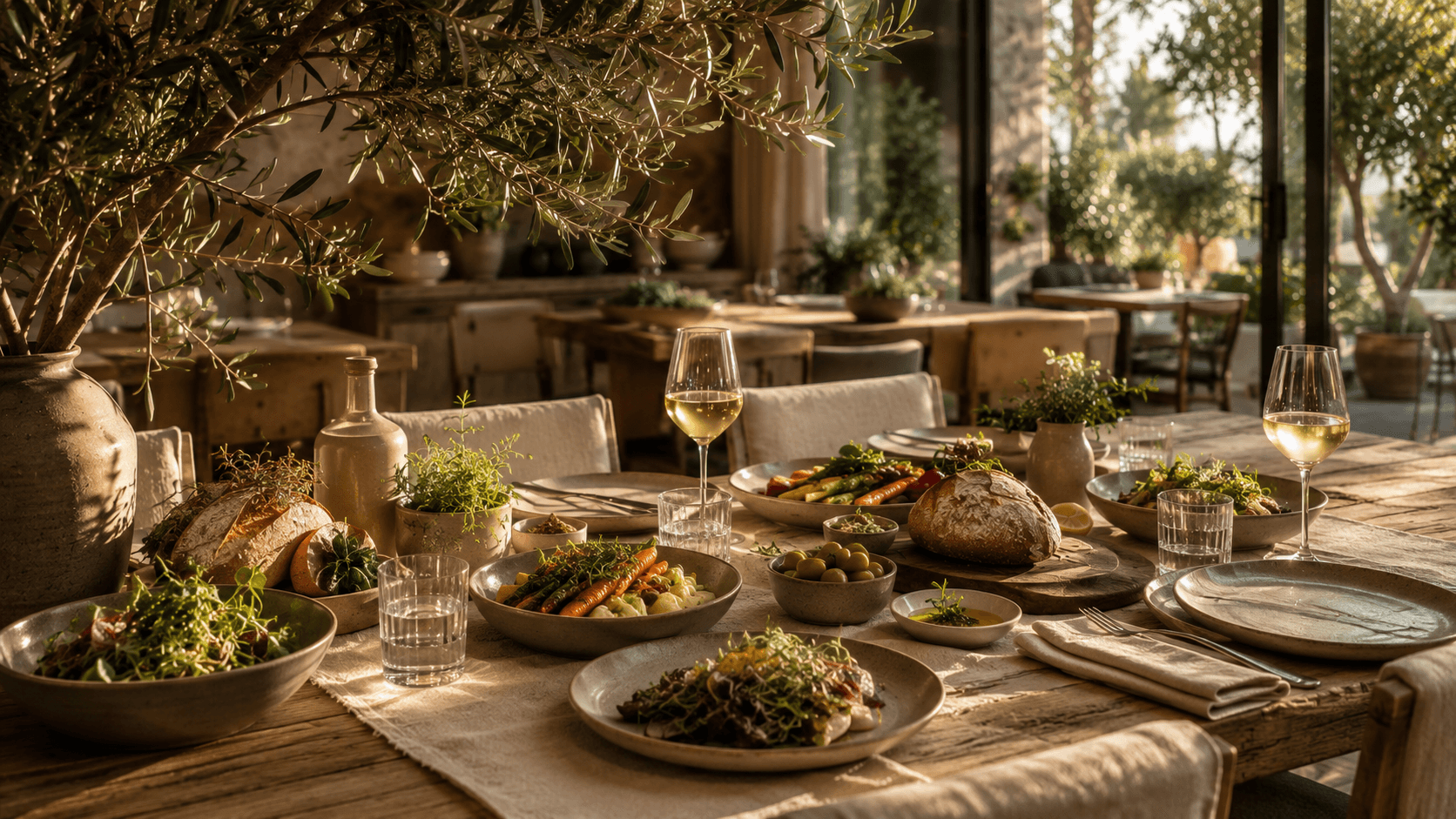
The valley
Grown byneighbours.
No cold-chain contracts, no central depot. Fourteen farms, one valley, and a phone that starts ringing at six each morning.
- Fourteen growers
- Forty kilometres at most
- Franschhoek, Western Cape
01How we buy
Three rules,kept daily.
- 01
Grown close
If it cannot be grown in the valley it has to earn its seat at the table. Most of the card comes from farms we could cycle to before service.
- 02
Picked ripe
Nothing is harvested early to survive a truck. The growers pick at dawn and the kitchen plans the day around whatever actually arrives.
- 03
Nothing wasted
Trim becomes stock, whey becomes marinade, yesterday's sourdough becomes today's crumb, and the compost goes back to Wildevlei on Monday.
02The ledger
Who brings what,and from how far.
Distances measured from the kitchen door. The fish is the one exception on the whole card, up from the coast on the day boats and never held overnight.
- Wildevlei FarmHeirloom vegetables and salad greens4 km
- Klein Vallei ApiaryFynbos honey6 km
- Olyfberg GroveOlive oil and table olives9 km
- Môrester DairyCultured butter, yoghurt and labneh11 km
- Steenbok RidgeFree-range eggs and poultry17 km
- Berg River MillStoneground flour for our sourdough23 km
- DoringkloofCitrus, quince and orchard fruit38 km
Seven more come and go with the season: mushroom foragers after the first rain, a fig farmer for six weeks in February, and whoever has a glut of lemons.
03Harvest at home
The table,boxed.
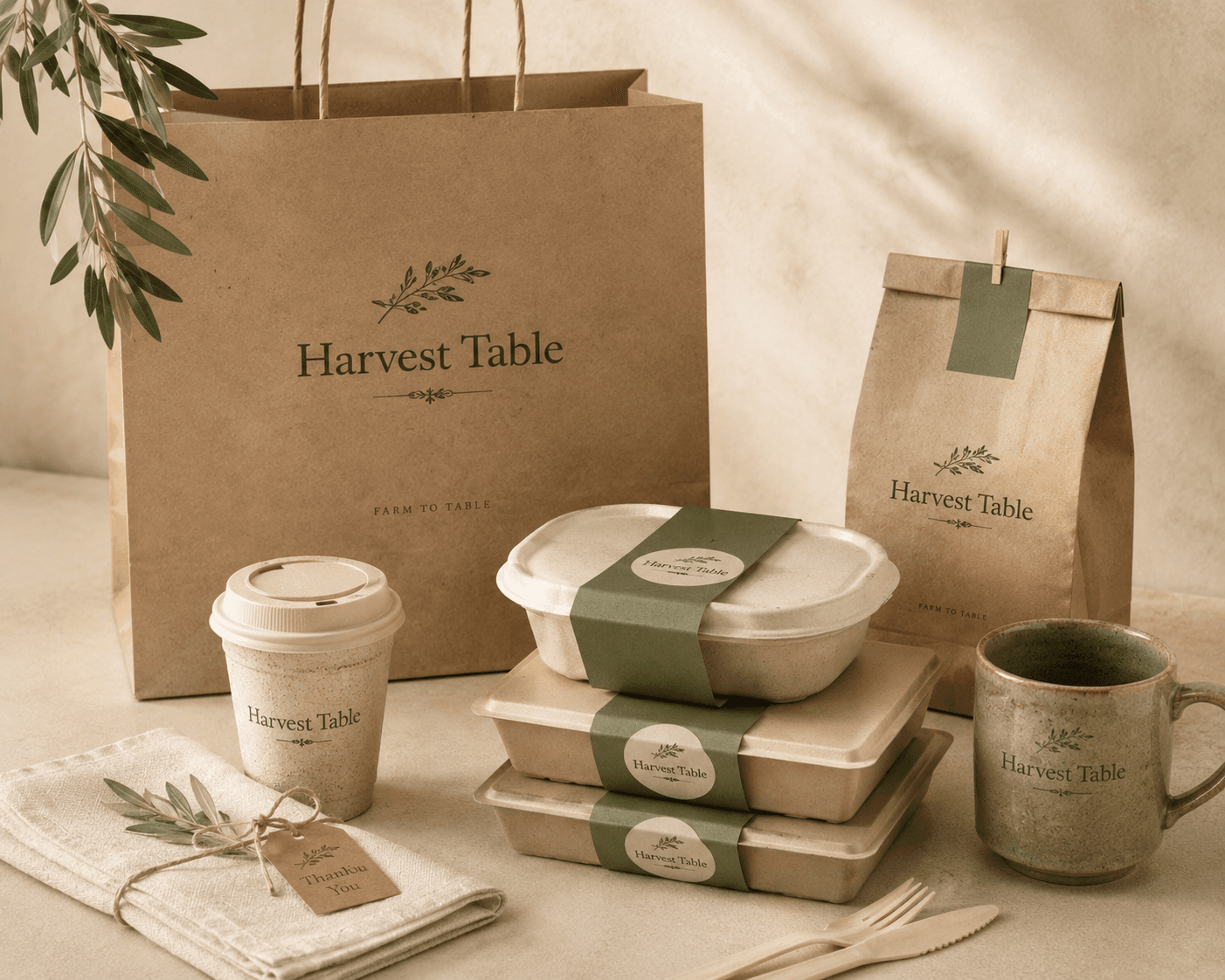
On Fridays we pack the week's surplus into supper boxes: sourdough, cultured butter, whatever the growers overdelivered, and a card telling you what to do with it. Fibre boxes, kraft paper, no plastic anywhere. Collect from noon until they run out, which is usually by two.
Find the kitchen door